
AMERICAN KITSCH
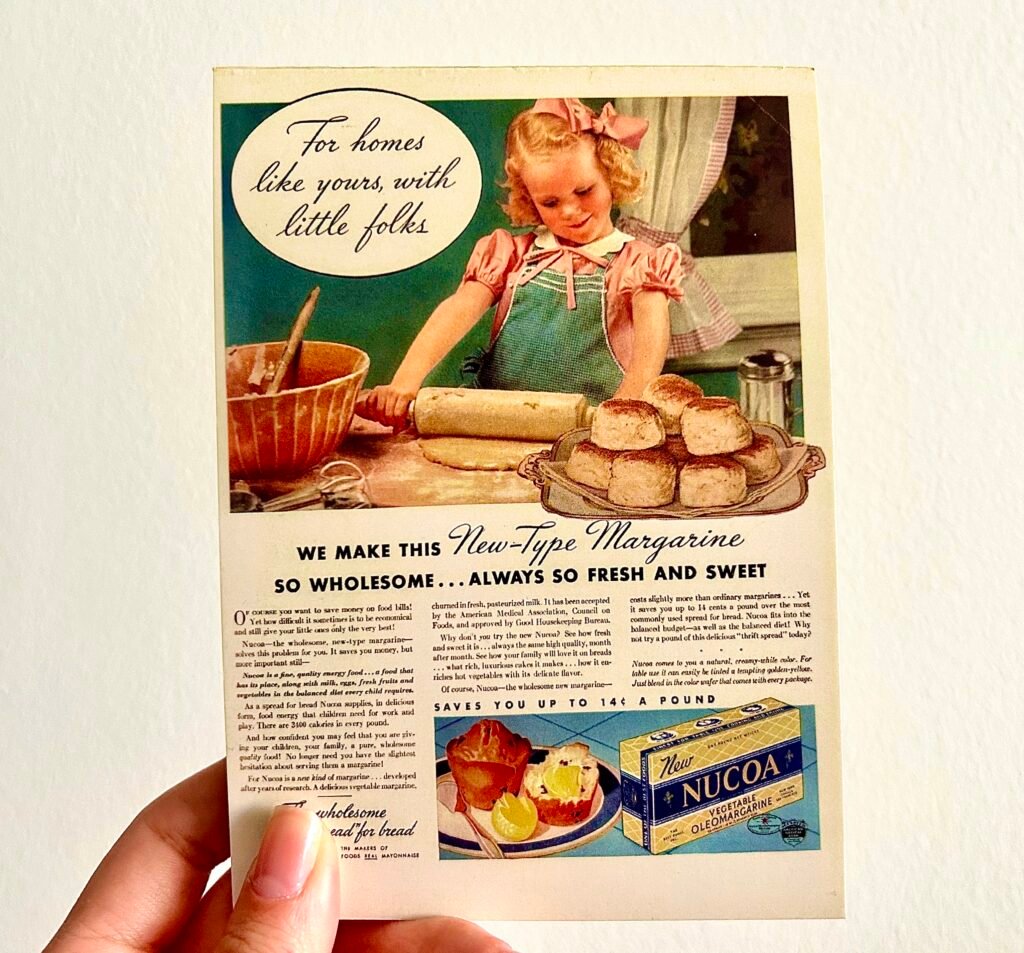
I like going to HomeGoods.
On the shelf sits a ceramic shepherdess with cheeks flushed apple-red, her smile permanently fixed in pastoral bliss. Next to her hangs a poster of horses galloping into a cotton-candy sunset, SUCCESS IS YOURS stamped across the bottom in metallic gold letters (motivational English that sounds translated even when it isn’t). Nearby, a plastic flower arrangement so cataclysmically saturated it hums under the fluorescent lights.
I like being in there because my brain can switch off. Happiness is sold by the pound here, and comfort is shrink-wrapped and stacked to the ceiling. A vague warmth takes over, as capitalism gently pats me on the head.
We call this stuff kitsch (or American kitsch), usually with a smirk. But what does it mean?
Milan Kundera offered one of the sharpest definitions, and it has nothing to do with objects. He wrote about two tears. The first falls when you see children running on the grass and you feel moved. That’s human. The second tear falls when you are moved by the fact that you are moved, together with all of humanity.
That second tear is kitsch.
It is sentiment rehearsing itself. Feelings performed back to yourself as proof that you are tender, correct, alive to beauty.
People like to say kitsch just means tacky, lowbrow, bad taste. But that’s lazy. Tacky is accidental; kitsch is engineered. It’s not the absence of taste but its optimization, all for emotions to be delivered with maximum speed and minimum resistance.
The word emerged in nineteenth-century Germany, loosely meaning to smear or to collect junk. True art, the kind people compare to old-school Cantonese double-boiled soup, requires patience. It may be bitter and opaque. It may refuse you. You sit with it, wrestle it, and if you’re lucky, you might find yourself thinking about life, or death, or at least calling your mother.
Kitsch skips the wrestling and hands you the answer key. Want to cry? Here’s a stray kitten with impossible eyes. Want reverence? Slap on a LED halo bright enough to sterilize doubt. Want luxury? Gold, more gold, velvet so synthetic it squeaks.
And when in doubt, add sugar.
American culture proved especially hospitable to this bargain. After the war came the 50s suburbia filled with money and optimism, and a deep suspicion of anyone insisting that happiness required suffering. Why endure difficulty when pleasure could be guaranteed? Pink Cadillacs. Donut-shaped diners. Neon blinking through the desert night of Las Vegas. Elvis immortalized on velvet. Plastic flamingos staked into lawns as trophies of domestic happiness.
The market, obliging as ever, replied: “Perfect, we’ll build it for you.” Can’t afford marble? Try resin. Can’t go to Paris? Here’s an Eiffel Tower that’s bigger, brighter, and improved by parking. It’s excessive, saccharine, sometimes bordering on foolish, but sincere in its desire to please. Its promise is simple: feel good now.
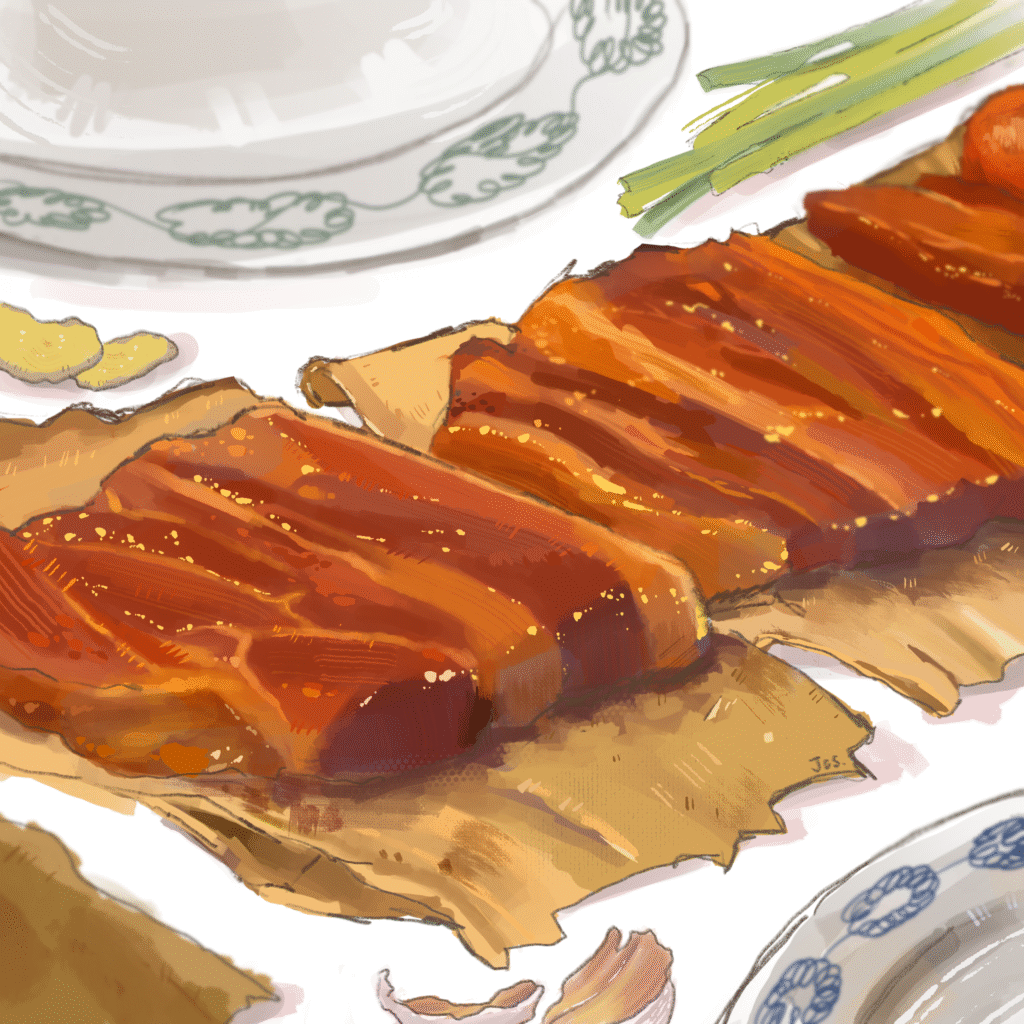
That promise tastes familiar to me. It tastes like braised pork belly.
Shanghai-style pork belly is heavy, glossy, and unapologetic—soy sauce braised with rock sugar (to cancel out the bitterness), Shaoxing wine, ginger, and scallions, bubbling slowly until the fat renders and the liquid pulls itself into a dark, glassy lacquer. It is a formula built on amplification, which also means it is perilously easy to push too far. A little extra sugar, a little too much reduction, and suddenly the dish hardens into caricature: too sweet, too loud, too blunt.
It’s the kind of food newcomers and critics like to dismiss after one earnest bite. Cloying and unsophisticated, they say, as if subtlety were the only measure of intelligent, refined taste. Well, Chinese stir fry joints and commercial kitchens don’t understand restraint. Restaurants chase mass appeal, not delicacies only the chosen ones can appreciate.
And then, almost immediately comes the chorus everyone knows by heart: “No restaurant food beats home cooking. My mom made it better.”
I understand the impulse. I learned to cook this dish from my mother, and of course she makes it beautifully. In her hands there are calibrations of fat against lean and sweet against savory. She taught me indulgence can be held in check by experience.
But, I don’t need every encounter with the dish to unfold like a documentary. Not every bite must unlock memories of nostalgia or ancestral ways of soy fermentation. Sometimes dinner is just dinner, and it is allowed to succeed simply by being delicious.
If kitsch is emotion delivered efficiently, then this pork belly might be its most edible form. The very qualities that make this dish easy to parody are also what make it powerful. It is direct. It loves sugar and shine and the certainty of pleasure. It offers sweetness and satisfaction without the demand that you trace it back through nostalgia and generations of technique. Even the louder restaurants try to do the same. Yes, fast-paced modern kitchens may sand off some complexity and history when they mass produce dishes, but they do remove friction and magnify what already works.
Today’s fascination with kitsch is really a longing for a time that believed, earnestly, that tomorrow would be better. A moment in which we perform emotion in order to reassure ourselves that we are good people, cultured people, people who feel the right things. We photograph food we don’t actually like and call it “healing.” We line up for exhibitions we don’t understand but desperately want to feel something in front of. We order the sweetest and glossiest version of a dish we know, deep down, is supposed to be more complicated.
And liking this is not a failure of character. Life is already exhausting, and refinement is tiring. Sometimes, I just want a spiritual candy that is nutritionally empty but immediately soothing. Sometimes I just want lacquer, surrendering fat, sauce thick enough that it tastes like a memory I didn’t actually have.
It might taste exaggerated, but as long as it gleams and doesn’t argue with me, it is enough.